Natural Fiber Home Textiles
Decorative Pillow Covers: A Guide to Texture, Fit, and Care
A pillow cover can change the character of a room with a few square inches of fabric. But its appeal rests on more than color: fiber, stitch, lining, closure, and fit all shape how it feels, wears, and responds to care.
Across a sofa, reading chair, or bed, decorative pillows occupy a small patch of space with an outsized presence. They catch the light, invite a hand, and soften the hard lines of furniture. A smooth woven cover can settle quietly into a room; a raised knit can make the same cushion feel warmer and more informal. These effects are not merely visual. The structure of the textile determines how it drapes, stretches, holds its shape, and handles daily contact.
Choosing well means looking past the first impression. A cover’s fiber content offers clues about softness and resilience, while its knit or weave gives the surface its character. A lining may add stability, and the closure can determine whether an insert is easy to change. Care instructions matter just as much: some natural-fiber covers are intended for professional cleaning, while others can tolerate a carefully managed wash at home. With these details in view, a decorative pillow becomes less of a guessing game and more of a considered textile choice.
Start with the surface: why texture matters
Texture is the first information a fabric gives the eye and hand. It can come from the fiber itself, from the way yarn is twisted, or from the pattern created by knitting and weaving. A plain, tightly woven cotton may feel crisp and even. A looped or bouclé surface has more relief, catching shadows across its small ridges. A knitted cover may show visible stitches and a flexible hand, while a woven one often feels more stable and planar.
The distinction between knit and woven fabric begins with how the yarns are organized. Knitting forms interlocking loops. Those loops can give a cover softness and some natural give, although the amount of stretch depends on the stitch, yarn, and finishing. Weaving interlaces lengthwise and crosswise yarns, usually creating a more dimensionally stable cloth. Neither construction is automatically better. A knit can bring a relaxed, tactile quality; a firm weave may be preferable where a tidy outline and predictable fit are priorities.
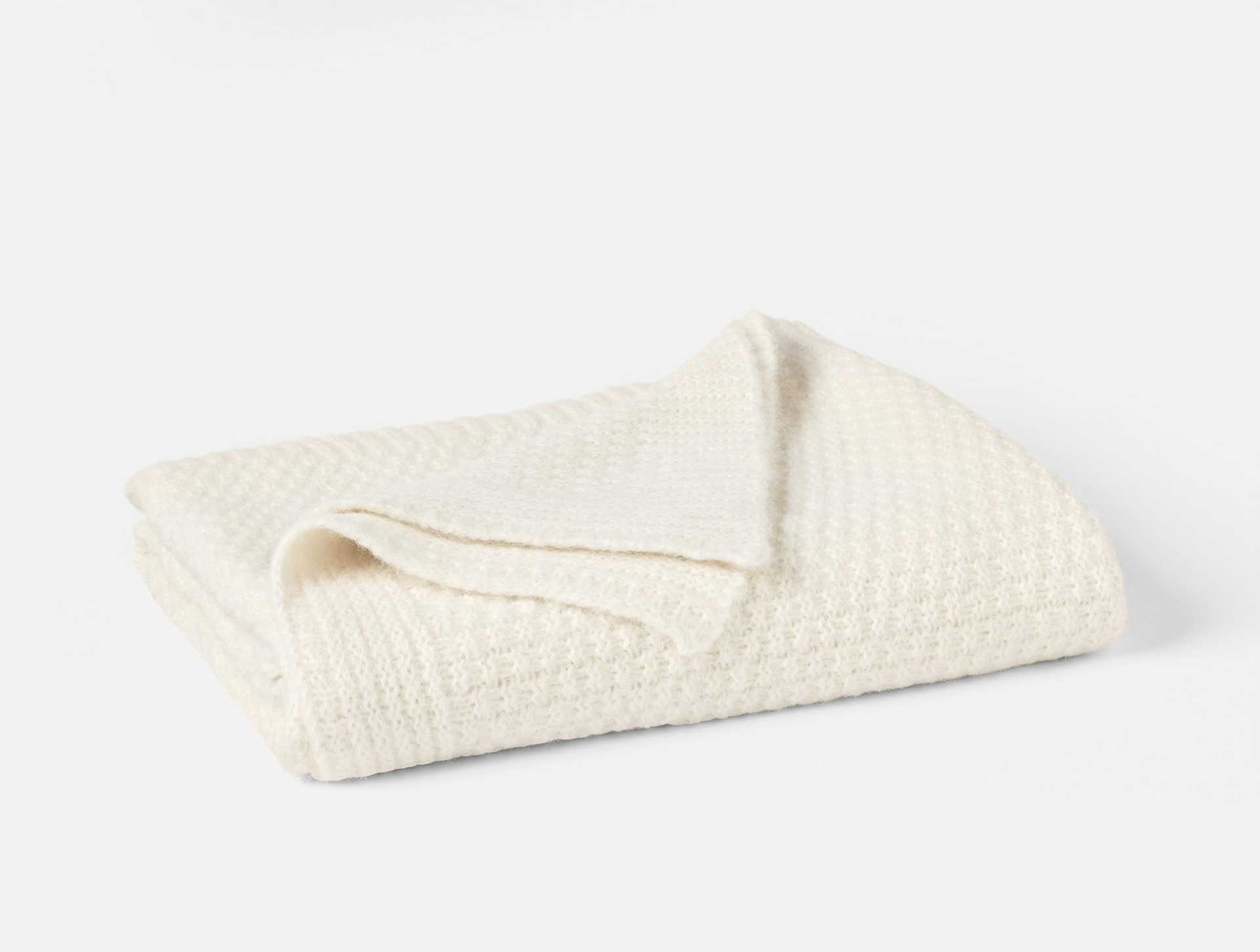
Stitch pattern adds another layer. Seed stitch, ribbing, cables, and openwork each make different arrangements of yarn visible. Small, dense stitches can create a fine-grained surface. Larger or more open stitches produce pronounced shadows and a more casual drape. Raised patterns may be pleasing in a room where smooth upholstery dominates, but they can also snag more readily on jewelry, pet claws, or rough surfaces. A close look at the fabric helps balance visual interest against the realities of where the pillow will be used.
Understanding pillow cover materials
Fiber names describe the raw material, not the whole performance of a textile. The final feel depends on fiber length and fineness, yarn construction, fabric density, finishing, and any blend. Two covers labeled with the same fiber may behave differently if one is loosely knitted and the other densely woven. Reading the material label alongside the construction details provides a more useful picture than relying on a single word such as “soft” or “natural.”
Cotton and linen
Cotton is widely used in home textiles because it can be spun and constructed in many ways. A smooth cotton cover may feel cool and clean, while a heavier knit can feel more substantial. Its care tolerance varies: some cotton textiles are machine washable, but dyes, linings, embellishments, and blends may require gentler treatment. The care label—not the fiber name alone—should guide cleaning.
Linen is made from flax and is often recognized by its natural variation and characteristic, slightly irregular surface. Depending on the weave and finish, it can feel crisp or soften with use. Its visible slubs—the small variations in yarn thickness—are part of the material’s character rather than necessarily a flaw. Linen can wrinkle, and a loose structure may shift more easily than a compact weave. For a relaxed interior, those signs of use may be welcome; for a sharply tailored look, choose a denser construction and follow its cleaning directions carefully.
Wool and alpaca
Animal fibers bring their own range of surface qualities. Wool can be springy, insulating, or smooth, depending on the fiber and how it is processed. Alpaca is valued for a soft hand and natural warmth, but the finished textile still varies according to grade, yarn, and construction. In pillow covers, these fibers may appear alone or blended with cotton and other materials to balance touch, structure, and durability.
A blend can combine qualities, but it does not guarantee easy care. A cotton-and-alpaca knit, for example, may still carry a dry-clean-only instruction because the shape, stitch, or finishing is sensitive to water and agitation. Check the percentage of each fiber and look for specific care guidance. If the label is missing or unclear, contact the maker before washing; a small uncertainty can become a costly change in size or texture.
Construction details that change the result
The fabric panel is only one part of a cover. Lining, seams, edges, and closures affect how it sits on an insert and how it ages. A lining can provide opacity, smooth the inside, and help a delicate or open knit retain a more consistent shape. It also adds another layer that may shrink or respond differently during cleaning. Where a cover is lined, its care requirements may reflect the most sensitive component, not just the outer fabric.
Seam finishing deserves a glance, especially on a cover likely to be used often. Clean, secure seams help keep edges from opening under pressure. Knife-edge construction creates a simple, squared outline; piping or other applied trim can emphasize the silhouette. Fringe, tassels, and other details add movement and dimension but may need protection during cleaning. These finishes are not merely decorative: they influence how a cover can be washed, dried, stored, and handled.
Closures are small engineering decisions. A concealed zipper usually gives a neat edge and makes it relatively simple to remove the cover. Buttons or ties can become part of the design, though they may require extra attention during laundering. Before buying, check whether the opening is wide enough to fit the intended insert without straining the seams. If the closure is difficult to reach or fasten, changing the cover may become a chore rather than a simple seasonal adjustment.
Getting the fit right
A well-fitting cover looks intentional and allows the fabric to show its best qualities. An insert that is too small can leave the corners slack and the surface deflated. One that is too large may force the seams, distort a knit, or make the cushion feel overly firm. The right pairing depends on the cover’s finished dimensions, its stretch, and the desired shape—not on a universal rule that every insert should be a fixed amount larger.
Begin by checking the cover’s stated measurements and comparing them with the insert’s actual dimensions. Inserts can vary from their nominal size, especially after use, so measure them rather than relying only on a label. For a flexible knit, consider how much the fabric may expand once filled. For a tightly woven cover with little give, accurate dimensions become more important. When possible, use the size guidance supplied by the maker, particularly for structured, lined, or unusually shaped covers.
Once the insert is inside, distribute the fill evenly toward the corners and smooth the surface without pulling hard on the seams. The cover should look full but not strained. If the zipper bows, the corners resist filling, or the pattern appears stretched, the insert may be too large. If fabric gathers or collapses, it may be too small or the fill may have lost resilience. Small adjustments in the insert can improve the silhouette without changing the cover.
A practical guide to pillow cover care
Care begins before a mark appears. Read the label when the cover arrives and keep its instructions where they can be found later. Separate the cover from the insert if the design allows, and note whether the closure, lining, trim, or contrasting colors impose special restrictions. A cover’s fiber content does not tell the whole story; the maker’s instructions account for construction and finishing details that may not be obvious from the surface.
When the label says dry clean only
Dry-clean-only directions should be taken seriously, particularly for textured knits, animal-fiber blends, lined covers, and pieces with delicate finishing. Water, heat, and movement can relax or tighten yarns, distort the outline, or alter the surface. Avoid spot experiments with household products unless the maker provides a method. For a stain or an overall refresh, consult a reputable textile cleaner and describe the fiber content and construction as accurately as possible.
When gentle machine washing is permitted
If the care label allows machine washing, follow its temperature, cycle, and drying instructions exactly. Remove the cover from the insert and secure closures to reduce catching. Washing with similar colors can limit dye transfer, while a mesh laundry bag may offer extra protection for a delicate surface if the label permits it. Use a mild detergent and avoid improvised treatments that might affect color or fiber. Never assume that a low-temperature setting makes every textile safe to wash.
Drying requires the same care. A tumble dryer can shrink, felt, or distort some natural-fiber textiles, and high heat can damage fibers even when the fabric seems sturdy. If the instructions call for air drying, lay the cover flat on a clean surface and reshape it gently while damp. Avoid hanging a heavy, wet knit by one edge, where gravity may lengthen it unevenly. Return the cover to use only when it is fully dry, including around seams and lining.
Everyday maintenance and storage
Regular light maintenance can reduce the need for full cleaning. Rotate decorative pillows so the same surface is not always exposed to sunlight or pressure. Follow fabric-specific guidance before brushing, vacuuming, or using a lint tool; a rough attachment can pull loops or raise fuzz. For a loose thread, do not tug. Trim only if the maker’s guidance supports it, or seek help when the thread is part of the structure rather than a simple surface fiber.
Sunlight, household dust, and friction gradually affect textiles. Direct sun may fade some dyes, so consider placement if a cover sits near a bright window. Keep textured pieces away from abrasive surfaces, sharp objects, and areas where they are likely to snag. When storing covers between seasons, clean them as directed, allow them to dry completely, and place them in a cool, dry location. Avoid compressing delicate knits under heavy objects, which can flatten their relief over time.
Choosing for a room, not just a shelf
A cover’s ideal texture depends partly on its setting. In a room with smooth leather, polished wood, or tightly woven upholstery, a raised knit or nubby surface can bring contrast. In a space already rich with pattern and texture, a quieter weave may create balance. Color matters, but so does scale: large stitches read boldly from across a room, while fine textures often reveal themselves only at close range.
Consider how the pillow will actually be used. A display cushion on a seldom-used chair may tolerate a more delicate construction than one placed on a family sofa. Pets, children, frequent lounging, and sunny windows all shape practical choices. If easy cleaning is essential, prioritize a cover with clear, manageable care instructions over assumptions based on fiber labels. A beautiful textile that cannot suit its environment may spend more time stored away than enjoyed.
A careful choice lasts longer
Decorative pillow covers are small objects with a complicated material life. Fiber sets possibilities; knit and weave determine structure; lining and finishing influence stability; fit affects both appearance and stress on the seams. Care instructions connect all of these choices to everyday use. Paying attention to those details helps a cover keep its shape and surface, whether its appeal comes from an open stitch, a linen slub, a smooth weave, or a carefully finished edge.
Before choosing, ask a few simple questions: What fibers are present? How is the fabric constructed? Is it lined, and how does it close? What insert dimensions are recommended? Can it be washed, or does it require professional care? The answers make it easier to select a cover that belongs in the room and in the routine of the people who live there. In the end, texture is most satisfying when it can be seen, touched, and cared for with confidence.
Quick checklist
- Read the full fiber and care labels rather than judging by material name alone.
- Compare knit or weave structure with the texture, durability, and formality you want.
- Check lining, seams, trim, and closure, since each can affect care and longevity.
- Measure the insert and cover, and follow the maker’s guidance for a balanced fit.
- Use the specified cleaning and drying method; avoid heat or water when the instructions prohibit them.